Walk into almost any convenience store today and you’ll find shelves lined with colorful cans promising instant energy, laser-sharp focus, and improved performance. Some advertise extreme caffeine levels, while others highlight vitamins, electrolytes, or exotic ingredients from around the world. With so many choices available, it’s no surprise that one question continues to appear in online searches:
What is the healthiest energy drink?
It’s a fair question, but the answer isn’t as simple as naming one brand over another.
The healthiest energy drink for one person may not be the healthiest for someone else. Your age, activity level, caffeine tolerance, diet, and personal preferences all play a role in determining what works best for you. A college student pulling an all-night study session may be looking for something entirely different than a busy parent, a shift worker, or someone who simply wants a little more energy to get through the afternoon.
That’s why it’s important to look beyond the marketing on the front of the package and pay closer attention to what’s actually inside the product. The ingredient list, the source of the caffeine, the amount of sugar, and the overall formulation tell a much bigger story than bold claims printed on a label.
In recent years, many consumers have also started looking for alternatives to traditional energy drinks. Instead of simply chasing the highest caffeine content, they’re searching for beverages made with plant-based ingredients, natural caffeine sources, and formulas that fit better into a wellness-focused lifestyle. Products like XeTRM are part of this growing trend, but before deciding whether it’s the right choice, it’s helpful to understand what makes an energy drink healthier in the first place.
What Really Makes an Energy Drink Healthy?
For years, energy drinks earned a reputation for being loaded with sugar and caffeine. While some products still follow that formula, today’s market has become much more diverse. You’ll now find everything from traditional canned energy drinks to powdered drink mixes, sparkling beverages, coffee-based drinks, and functional wellness beverages.
So what should you actually look for?
The first thing many people consider is the source of the caffeine. Caffeine itself isn’t automatically good or bad. Millions of people consume it every day in coffee, tea, and other beverages. The difference often comes down to how much caffeine is included and what other ingredients accompany it.
Natural sources of caffeine, such as green tea, yerba mate, and guarana, have become increasingly popular because they bring more than just caffeine to the table. These plants naturally contain a variety of compounds that have made them popular around the world for generations. While every ingredient has its own characteristics, many people appreciate beverages that rely on plant-based sources instead of relying entirely on isolated stimulants.
Sugar is another factor worth considering. Some traditional energy drinks contain significant amounts of added sugar, while others are sugar-free or use alternative sweeteners. Neither approach is automatically right or wrong for everyone, but it’s important to understand what you’re consuming. Reading the nutrition label is one of the simplest ways to compare products objectively.
Ingredient quality is another area that deserves attention. As consumers have become more health-conscious, companies have responded by creating products that combine energy-supporting ingredients with fruits, botanicals, probiotics, vitamins, minerals, and other functional ingredients. Rather than simply providing a temporary boost, many of these products are designed to fit into a broader wellness routine.
Transparency also matters. Reputable companies clearly identify what’s in their products and make it easy for consumers to review the ingredient list. If a label leaves you with more questions than answers, it may be worth taking a closer look before making a purchase.
Perhaps the biggest lesson is that no single ingredient determines whether an energy drink is “healthy.” It’s the complete formulation that matters. Looking at the entire picture allows you to make a more informed decision instead of relying on advertising alone.
Is Coffee Healthier Than an Energy Drink?
Coffee has been one of the world’s favorite beverages for centuries, and for good reason. For many people, nothing starts the day better than a freshly brewed cup of coffee. It’s familiar, widely available, and naturally contains caffeine that helps many people feel more alert and focused.
Because of coffee’s long history, it’s often used as the benchmark when comparing energy drinks.
The reality is that coffee and energy drinks aren’t trying to accomplish exactly the same thing.
Coffee is wonderfully simple. Depending on how it’s prepared, it may contain little more than roasted coffee beans and water. Many people enjoy that simplicity because they know exactly what they’re drinking. Others appreciate the rich flavor, the ritual of brewing it each morning, and the steady energy it provides throughout the day.
On the other hand, modern energy drinks have evolved well beyond simply delivering caffeine. Many now include ingredients intended to complement an active lifestyle. Depending on the product, those additions may include plant extracts, vitamins, minerals, amino acids, probiotics, or fruit-based ingredients.
That doesn’t automatically make one better than the other.
Some people discover that coffee is all they need. Others don’t enjoy the taste of coffee or find that it doesn’t fit well into their daily routine. Still others prefer beverages that offer a broader blend of ingredients beyond caffeine alone.
It’s also worth remembering that everyone’s body responds differently. One person may drink coffee late in the afternoon without any problem sleeping, while another may find that even a small amount of caffeine affects them for hours. That’s why personal experience, moderation, and paying attention to your own body’s response are just as important as reading the ingredient label.
Rather than asking whether coffee is healthier than an energy drink, a better question might be this: Which beverage best fits your lifestyle and your personal goals?
For some people, the answer will always be coffee. For others, it may be a functional beverage that combines natural caffeine with additional ingredients.
Where Does XeTRM Fit Into the Picture?
As more consumers began looking for alternatives to traditional energy drinks, companies started developing products that focused on ingredient quality rather than simply increasing caffeine levels. XeTRM is one example of that shift.
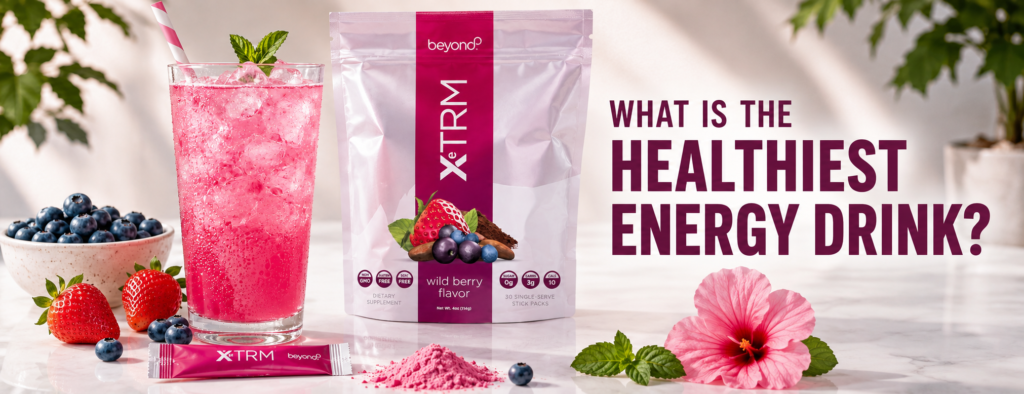
Instead of being sold as a typical canned energy drink, XeTRM is a convenient drink mix designed to fit easily into a busy lifestyle. Each stick pack combines several ingredients that have become popular among people looking for a more natural approach to daily energy.
Among those ingredients are green tea, yerba mate, guarana, Panax ginseng, acai, blueberries, cacao, trace minerals, and probiotics. Each ingredient contributes something different to the overall formula, creating a product that’s about more than caffeine alone.
Green tea has long been appreciated for its naturally occurring antioxidants and mild source of caffeine. Yerba mate has been enjoyed throughout South America for generations and remains a favorite among people looking for plant-based energy. Guarana has been used in beverages for many years because of its naturally occurring caffeine, while Panax ginseng has an equally long history of traditional use.
The addition of fruits such as acai and blueberries reflects another trend in the wellness industry: combining energy-supporting ingredients with foods known for their naturally occurring plant compounds. Trace minerals and probiotics further distinguish XeTRM from many conventional energy drinks by expanding the formula beyond simple stimulation.
Of course, that doesn’t mean XeTRM is automatically the best choice for everyone. Some people may still prefer coffee. Others may enjoy a traditional energy drink from time to time. The important point is that today’s consumers have more choices than ever before, allowing them to select products that better align with their own preferences and wellness goals.
When comparing products, it’s helpful to ask not only how much caffeine they contain, but also what else the formula offers. Sometimes the biggest differences aren’t found in the caffeine content at all—they’re found in the overall approach to the product.
Putting It All Together
If there’s one thing to take away from this discussion, it’s that the search for the healthiest energy drink shouldn’t begin with a brand name. It should begin with understanding what matters most to you.
Some people want the strongest caffeine boost available. Others are trying to reduce sugar, choose products with more natural ingredients, or find beverages that fit into a healthier lifestyle. None of those goals are wrong. They simply reflect different priorities.
That’s why comparing ingredient lists is often more valuable than comparing advertisements. Looking at the source of the caffeine, the amount of added sugar, the overall ingredient profile, and the company’s commitment to transparency can tell you far more than a slogan on the front of the package.
As the energy drink market continues to evolve, consumers are gaining access to products that offer more variety than ever before. Coffee remains an excellent option for millions of people. Traditional energy drinks continue to be popular. At the same time, products like XeTRM demonstrate that there’s growing interest in functional beverages that combine natural caffeine sources with a broader range of wellness-focused ingredients.
Ultimately, making an informed decision is far more important than following trends or choosing the product with the loudest advertising campaign.
Conclusion
So, what is the healthiest energy drink?
The honest answer is that there isn’t a single product that’s perfect for everyone.
The healthiest choice is the one that fits your individual lifestyle, your caffeine tolerance, and your personal wellness goals. Taking a few extra minutes to compare ingredients, understand what you’re drinking, and choose products from companies that value quality can help you make a more informed decision.
If you’re interested in a natural energy drink mix that combines plant-based caffeine sources with ingredients like green tea, yerba mate, guarana, probiotics, trace minerals, and antioxidant-rich fruits, XeTRM is certainly one option worth exploring. Like any wellness product, it’s best viewed as part of an overall healthy lifestyle that includes balanced nutrition, regular physical activity, adequate sleep, and good hydration.
The more you understand about what’s in your energy drink, the easier it becomes to choose the one that’s right for you.